



14-Oct-2026
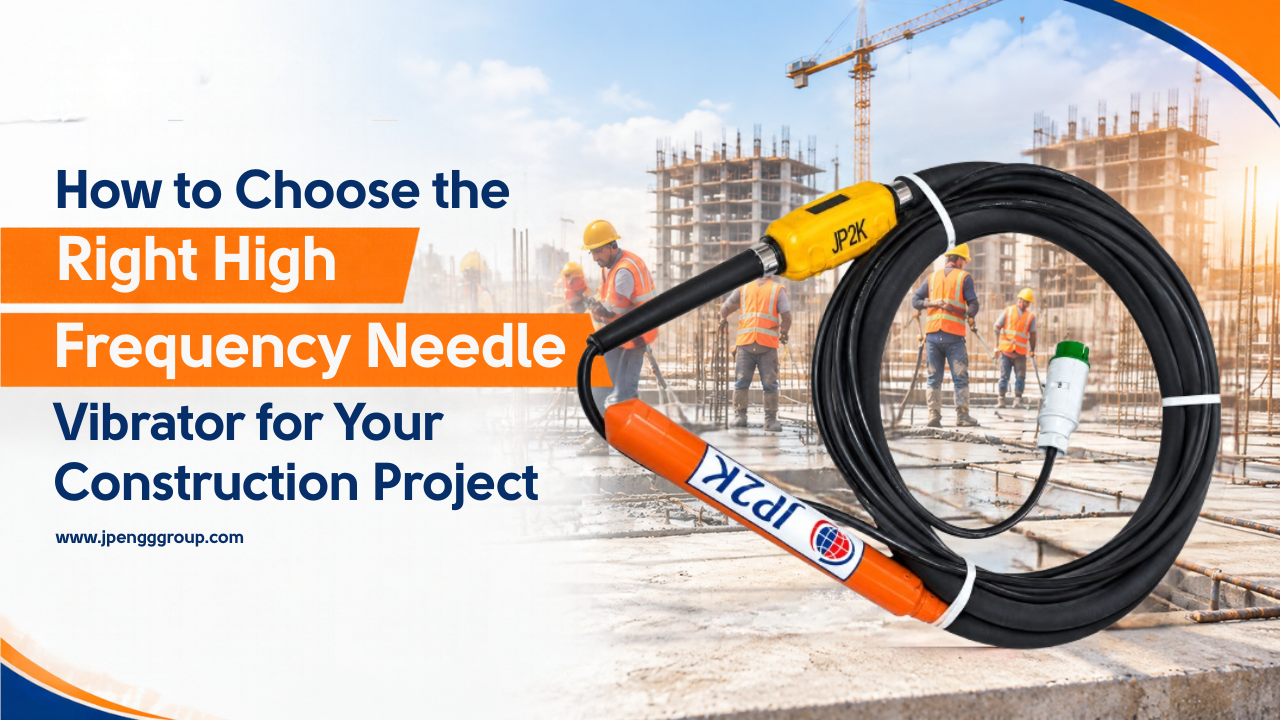
Concrete plays a vital role in the strength, durability, and stability of any construction project. However, achieving high-quality concrete requires more than just mixing and pouring. Proper compaction is essential to remove trapped air bubbles, eliminate voids, and ensure that concrete fills the formwork effectively. This is where a High Frequency Needle Vibrator becomes an important piece of construction equipment.
High frequency needle vibrators are widely used in residential buildings, commercial structures, bridges, highways, foundations, and other infrastructure projects. Choosing the right vibrator can improve concrete compaction, enhance structural quality, and help maintain construction efficiency.
In this blog, we will discuss the key factors to consider when selecting the right high frequency needle vibrator for your construction project.
A high frequency needle vibrator is a concrete compaction tool designed to remove entrapped air from freshly poured concrete. It uses high-frequency vibrations to help concrete particles settle closely together, resulting in a dense and uniform concrete structure.
Unlike conventional concrete vibrators, high frequency needle vibrators are designed to deliver rapid and consistent vibration. Depending on the model, they may use an electric motor, an electronic frequency converter, and a vibrating needle connected through a suitable cable or hose assembly.
These machines are commonly used for:
Building foundations and columns
RCC beams and slabs
Bridge and highway construction
Infrastructure and industrial projects
Concrete walls and structural elements
Before selecting a high frequency needle vibrator, evaluate the specific requirements of your project. Different construction applications require different needle sizes, operating arrangements, and levels of accessibility.
For example, concrete columns and narrow walls may require a smaller-diameter needle to reach confined spaces. Large foundations and heavily reinforced concrete sections may require a suitable larger-diameter needle for effective compaction.
Tip: Always select equipment according to the concrete section, reinforcement spacing, and site conditions rather than choosing a machine based on price alone.
The needle diameter is one of the most important factors when purchasing a high frequency needle vibrator. It affects the area covered by vibration and the equipment's suitability for different concrete structures.
Common needle diameters include 25 mm, 40 mm, and 60 mm, although other sizes may also be available.
25 mm needle: Suitable for narrow sections, congested reinforcement, and locations requiring greater accessibility.
40 mm needle: A versatile option for many general-purpose concrete compaction applications.
60 mm needle: Often suitable for larger concrete sections where broader vibration coverage is required.
The correct diameter depends on the reinforcement spacing, concrete mix, formwork dimensions, and manufacturer's recommendations. The needle must fit between reinforcement bars without causing damage or restricting insertion.
High frequency vibration helps compact concrete efficiently by reducing trapped air and improving the uniformity of the finished structure.
When comparing different models, consider the operating frequency, vibration performance, and consistency under normal working conditions.
A suitable vibrator should provide effective compaction without causing excessive vibration or segregation of the concrete mix. Always follow the manufacturer's operating instructions and recommended vibration duration.
The power supply is another important consideration, particularly for large construction sites and projects operating multiple machines.
Before purchasing, check:
Required voltage and frequency
Single-phase or three-phase power requirements
Compatibility with the available frequency converter
Cable length and power supply arrangements
Electrical safety and site operating conditions
Many industrial high frequency needle vibrator systems use a three-phase power supply, such as 415 V, 50 Hz, but specifications vary by model.
Make sure the selected equipment is compatible with the electrical infrastructure available at your construction site.
The length of the hose or cable can directly affect the convenience of operation. A suitable length allows workers to reach the required concrete sections without repeatedly repositioning the equipment.
For projects involving deep foundations, large slabs, or elevated structural sections, assess the required working reach before finalizing your purchase.
Choose a length that supports efficient operation while avoiding unnecessary cable handling, excessive bends, or unsafe working arrangements.
The frequency converter is an important component of many high frequency concrete vibration systems. It supplies the required electrical power and operating frequency to the compatible vibrating needle.
Before purchasing a vibrator, verify:
Converter compatibility with the selected needle
Required voltage and frequency output
Rated power and current capacity
Connector and cable compatibility
Suitability for the expected number of connected outlets
If your project requires multiple vibrating needles, confirm that the converter is specifically rated to operate the intended combination of equipment.
Construction equipment is frequently exposed to demanding site conditions, including concrete splashes, dust, repeated handling, and continuous operation.
When choosing a high frequency needle vibrator, look for robust construction, reliable components, suitable cable protection, and a design intended for the working environment.
Durable equipment can help reduce interruptions and support consistent performance throughout the project.
Maintenance and technical support are essential for keeping construction equipment operational.
Before purchasing, ask the supplier about spare parts availability, servicing support, warranty coverage, and troubleshooting assistance.
Regularly inspect the needle, cable, connectors, and other components according to the manufacturer's maintenance schedule. Clean the equipment after use and store it properly to help extend its service life.
A supplier offering dependable after-sales support can make equipment ownership easier, particularly when machinery is being used across multiple construction sites.
Price is an important factor, but the lowest-priced machine may not always be the most economical choice over its entire service life.
Compare equipment based on its specifications, construction quality, expected workload, maintenance requirements, warranty, and service availability.
Consider the total cost of ownership, including the initial purchase price, operating expenses, replacement parts, and potential downtime.
Selecting the right machine for your application can help improve productivity and support better project cost management.
Avoid these common purchasing mistakes:
Selecting an unsuitable needle diameter for the concrete structure.
Ignoring reinforcement spacing and site accessibility.
Purchasing equipment without checking power supply compatibility.
Choosing an incorrect hose or cable length.
Using an incompatible frequency converter.
Ignoring maintenance requirements and spare parts availability.
Selecting equipment based only on its purchase price.
Making an informed decision before purchasing can help prevent unnecessary operational difficulties.
JP Engineering Services (JP2K) provides construction machinery and equipment solutions for customers across India. With a focus on practical construction requirements, product suitability, and customer support, the company helps customers identify equipment options for their applications.
When evaluating a high frequency needle vibrator, the JP2K team can assist with discussing your project requirements and identifying a suitable equipment configuration, subject to product availability and specifications.
For product details and quotations, contact JP Engineering Services and share your required needle diameter, cable length, power supply requirements, and intended application.
Choosing the right high frequency needle vibrator is essential for achieving effective concrete compaction and supporting the quality of construction work. Factors such as needle diameter, vibration performance, power supply, cable length, converter compatibility, durability, and after-sales support should all be considered before making a purchase.
By understanding your project requirements and comparing equipment specifications carefully, you can select a suitable high frequency needle vibrator for your construction site.
Looking for a high frequency needle vibrator for your next project? Contact JP Engineering Services (JP2K) to discuss your requirements and explore suitable construction equipment options.
1. What is the main purpose of a high frequency needle vibrator?
Its primary purpose is to compact freshly poured concrete by helping remove entrapped air and reduce voids, resulting in denser concrete.
2. Which needle diameter is best for construction work?
The appropriate diameter depends on the concrete section, reinforcement spacing, and application. Smaller needles are generally suitable for confined spaces, while larger needles may be more appropriate for larger concrete sections.
3. Why is frequency converter compatibility important?
The converter must match the vibrating needle's electrical requirements to ensure appropriate operation and help prevent equipment damage.
4. Can a high frequency needle vibrator be used for all concrete applications?
No single needle size or configuration is ideal for every application. The equipment should be selected according to the concrete mix, structural dimensions, reinforcement, and manufacturer's guidance.
5. What should I check before buying a high frequency needle vibrator?
Check the needle diameter, operating specifications, power supply, converter compatibility, cable length, build quality, warranty, and after-sales support.
How to Choose the Right High Frequency Needle Vibrator for Construction
14-Oct-2026
Read More

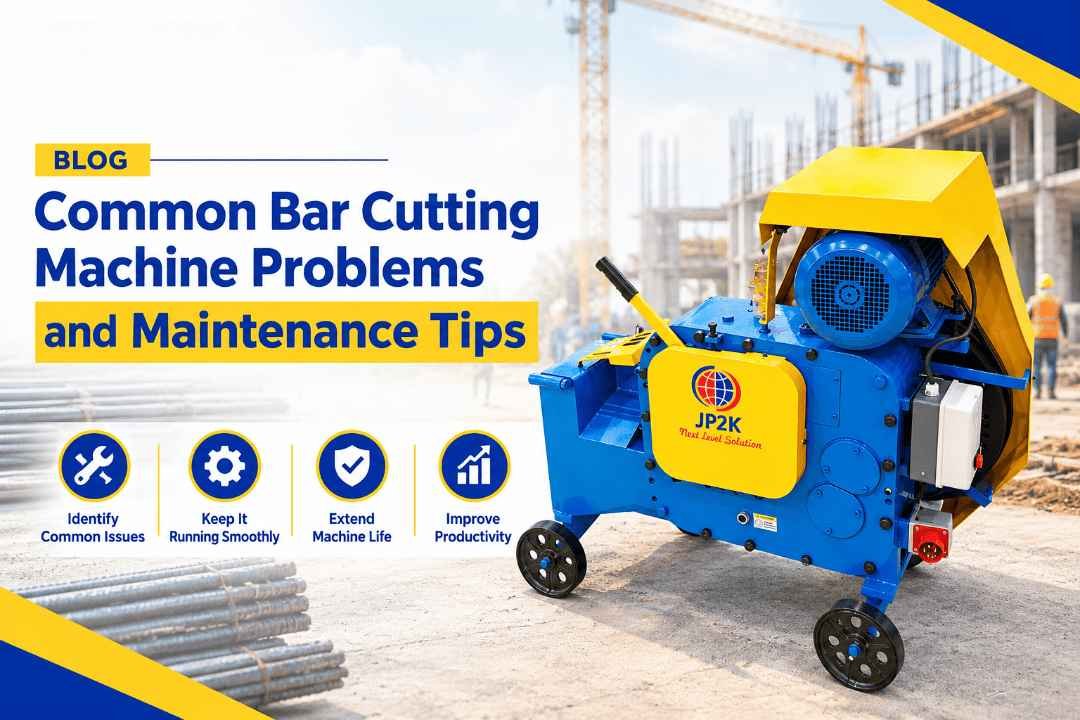
Common Bar Cutting Machine Problems and Maintenance Tips
10-Oct-2026
Read More
.png)
JP2K Showcases Construction Machinery at bauma CONEXPO INDIA 2026
08-Oct-2026
Read More
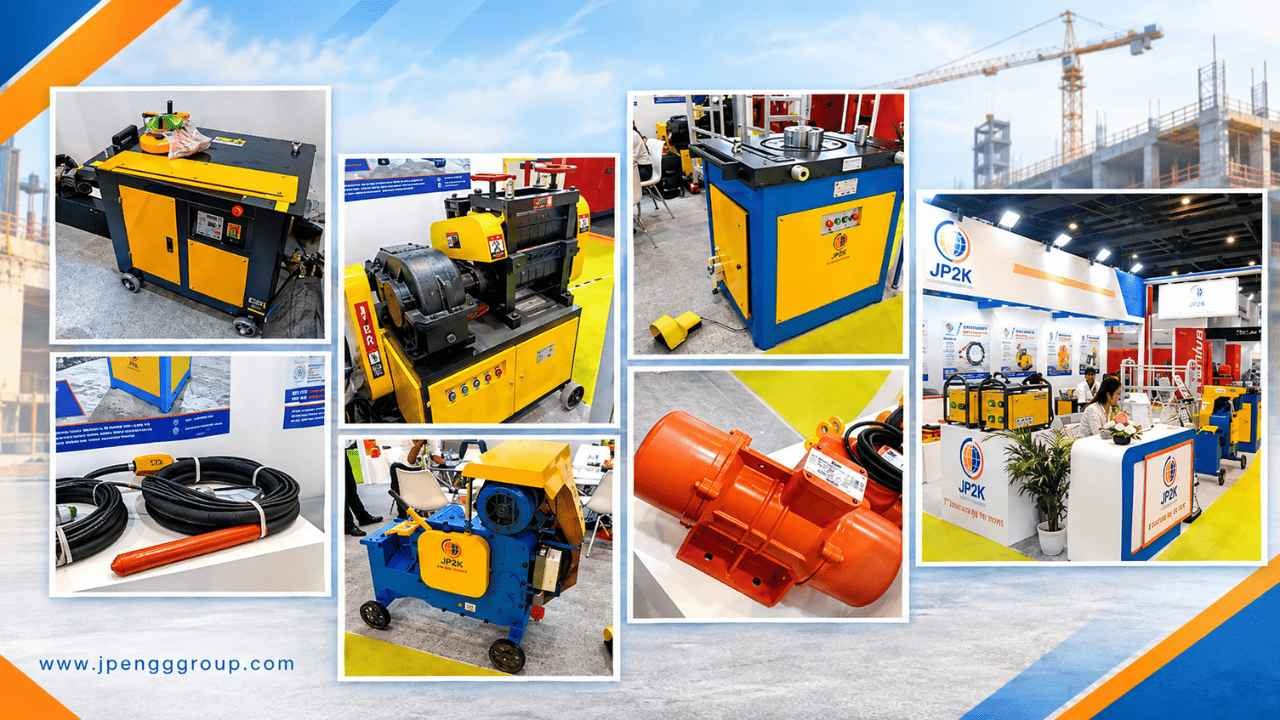
JP2K at bauma CONEXPO INDIA 2026 | Construction Machinery
05-Oct-2026
Read More








Copyright © 2026 J P Engineering Services
And Get Technical Specifications