


.png)

14-Feb-2026
In modern
construction, proper soil and asphalt compaction is the foundation of
durable infrastructure. Whether it’s a small road repair, footpath, parking
area, or landscaping project, a Walk Behind Roller is one of the most
practical and cost-effective machines for achieving uniform compaction.
Compact, powerful, and easy to operate, walk behind rollers are widely used
across construction sites where larger rollers are not feasible.
This blog
will help you understand what a walk behind roller is, its types, features,
applications, benefits, and how to choose the right one for your project.
A Walk
Behind Roller is a compact compaction machine operated manually by an
operator walking behind it. It uses static weight and vibration (in vibratory
models) to compact soil, sand, gravel, and asphalt. Due to its small size, it
is ideal for confined areas and finishing work.
1.
Single Drum Walk Behind Roller
2.
Double Drum Walk Behind Roller
Walk
behind rollers are widely used in:
Road
repair & patchwork, Footpaths & pavements, Parking lots, Driveways, Trench
compaction, Landscaping projects, Industrial flooring preparation, Housing
& commercial construction sites
1.
Efficient Compaction
Vibration
ensures uniform density, reducing chances of cracks and settlement.
2. Easy
Operation
Minimal
training required; simple controls make it operator-friendly.
3.
Cost-Effective
Lower
purchase, fuel, and maintenance cost compared to ride-on rollers.
4.
Perfect for Confined Spaces
Works
efficiently where heavy rollers cannot reach.
5. High
Productivity
Faster
work completion with consistent compaction quality.
|
Feature |
Walk
Behind Roller |
Ride-On
Roller |
|
Size |
Compact |
Large |
|
Operator |
Walk-behind |
Seated |
|
Area
Coverage |
Small to
medium |
Medium
to large |
|
Cost |
Affordable |
Expensive |
|
Ideal
For |
Repair
& confined work |
High-volume
projects |
When
selecting a walk behind roller, consider:
Drum width
& weight, Type of material to be compacted, Single or double drum
requirement, Vibration frequency & amplitude, Fuel type (diesel or petrol),
Availability of service & spare parts
Regularly
check engine oil and filters, inspect vibration system before use, clean drum
surface after work, tighten bolts and fittings periodically, Store the machine
in a dry and covered area
With
increasing demand for quality, speed, and efficiency, walk behind
rollers have become a must-have machine for contractors and builders. They
ensure strong foundations, smooth finishes, and long-lasting surfaces—all
while saving time and operational costs.
A Walk Behind Roller is a smart investment for any construction professional involved in roadwork, paving, or soil compaction. Its compact size, reliable performance, and versatility make it indispensable for small to medium-scale projects. Choosing the right model and maintaining it properly can significantly improve project quality and profitability.
Walk Behind Roller: The Ultimate Guide for Efficient Compaction in Construction
14-Feb-2026
Read More

.png)
High Frequency Vibrator with Inbuilt Converter: The Ultimate Solution for Superior Concrete Compaction
12-Feb-2026
Read More
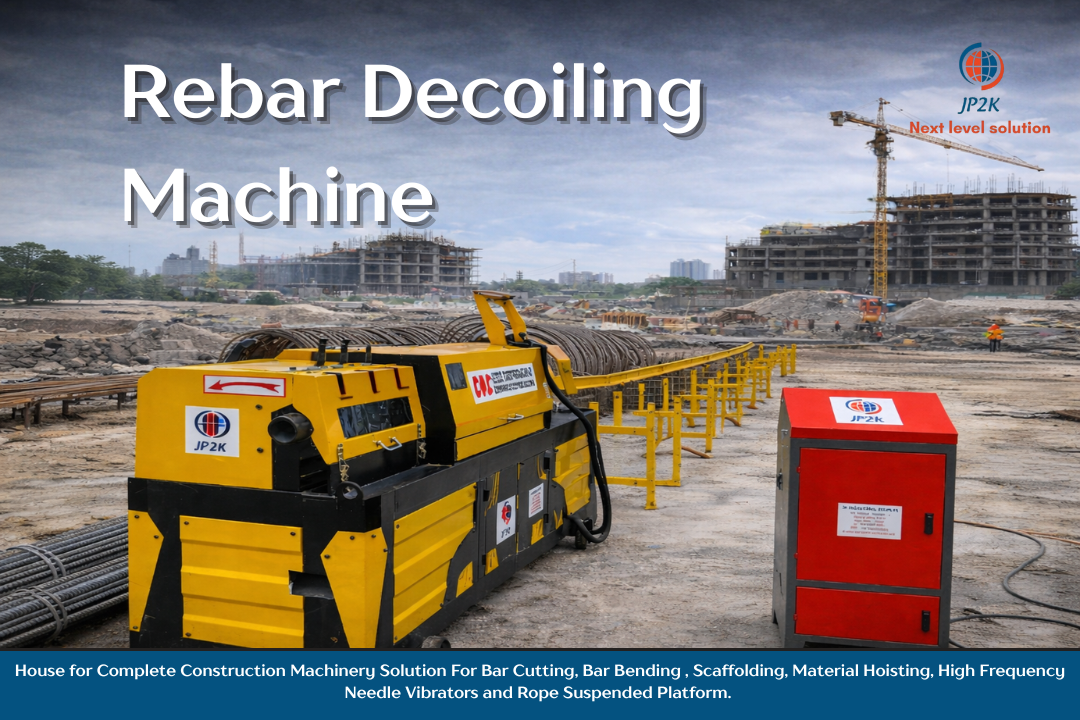
Rebar Decoiling Machine: Complete Guide for Modern Construction Projects
11-Feb-2026
Read More
.png)
One Power Source. Four Outputs. Maximum Site Productivity.
06-Feb-2026
Read More






Copyright © 2025 J P Engineering Services
And Get Technical Specifications