


23-Apr-2026
The Power of Precision: Why High-Frequency Needle Vibrators are Essential for Superior Concrete
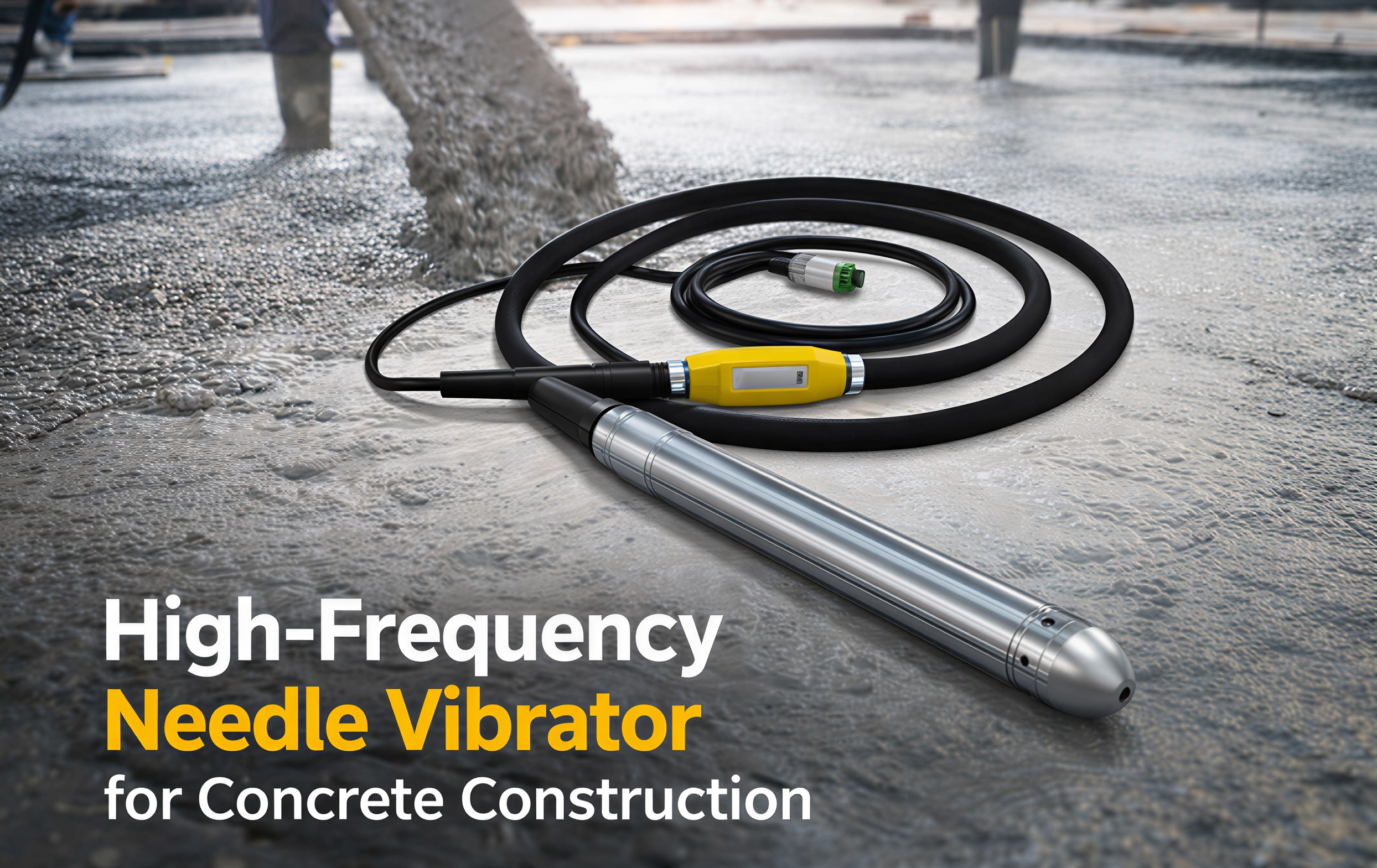
In the world of construction, the quality and durability of concrete are paramount. Achieving strong, void-free concrete structures relies heavily on proper consolidation – the process of removing entrapped air bubbles. While various methods exist, the high-frequency needle vibrator stands out as a superior tool for this critical task. This blog post will delve into what makes these devices indispensable for modern construction, exploring their benefits, functionality, and why they are the preferred choice for professionals.
What is a High-Frequency Needle Vibrator?
A high-frequency needle vibrator is a specialized piece of construction equipment designed to consolidate freshly poured concrete. Unlike conventional vibrators, which often rely on mechanical means, high-frequency models utilize an electric motor within the vibrator head to generate rapid, high-frequency vibrations, typically around 12,000 vibrations per minute (VPM). This intense vibration effectively removes air pockets, ensuring the concrete settles densely and uniformly within the form-work.
Key Benefits of Using High-Frequency Needle Vibrators
1. Enhanced Efficiency and Productivity
High-frequency vibrators are designed for optimal performance, leading to significant time and labor savings. The following table highlights the key differences between high-frequency and conventional vibrators:
Feature | High-Frequency Needle Vibrator | Conventional Mechanical Vibrator |
Vibration Frequency | High (approx. 12,000 VPM) | Lower (approx. 8,000 - 10,000 VPM) |
Power Source | Electric (often with integrated converter) | Mechanical (flexible shaft and motor) |
Operator Comfort | High (reduced hand-arm vibration) | Lower (higher vibration transmission) |
Maintenance | Low (fewer moving parts) | Higher (requires regular lubrication) |
Reach | Excellent (long cables and hoses) | Limited (by flexible shaft length) |
Durability | High (sealed, IP67 rated) | Moderate (exposed mechanical parts) |
The ergonomic and lightweight construction of high-frequency vibrators often allows for efficient one-person operation, significantly reducing physical strain and increasing maneuverability on the job site. Furthermore, power is transmitted through electrical cables, which enables longer transmission distances and extends the vibration range. This capability results in fewer repositioning efforts and faster coverage of large areas. Additionally, electrical power transmission eliminates the friction losses common in flexible shaft vibrators, ensuring consistent and efficient vibration throughout the process. The design also minimizes vibrations transmitted to the operator, enhancing comfort and reducing fatigue during prolonged use.
2. Superior Concrete Quality and Durability
The primary goal of concrete consolidation is to achieve a dense, strong, and durable structure. High-frequency vibrators excel in this regard:
The rapid and consistent vibrations of high-frequency models effectively bring entrapped air to the surface, resulting in concrete with fewer voids and a higher density. This denser concrete translates to increased compressive strength, reduced permeability, and a smoother, more aesthetically pleasing surface finish. By maintaining a stable speed and high amplitude, even in varying concrete slumps, these vibrators ensure uniform consolidation across the entire pour [1].
3. Increased Durability of Equipment
These vibrators are built to withstand the harsh conditions of construction sites:
The electronic components are typically enclosed in fully sealed casings, often rated IP67, which makes them highly resistant to water, dust, and other abrasive external agents. Constructed from robust, high-resistance materials, these tools are designed for longevity and reliability, thereby minimizing downtime and replacement costs.
4. Ease of Use and Transport
Simplicity in operation and handling contributes to overall project efficiency:
Their compact and lightweight design facilitates easy transportation and storage between job sites. Generally, high-frequency vibrators are straightforward to use and require minimal specialized technical knowledge, which broadens their applicability across different skill levels.
5. Versatility
High-frequency needle vibrators offer adaptability for various construction scenarios:
These vibrators are suitable for diverse working conditions and concrete types, ranging from foundations and slabs to columns and beams. A single frequency converter can often power multiple high-frequency needles, allowing for greater flexibility and coverage on larger projects. Additionally, their streamlined design allows them to easily slide through rebar, ensuring thorough consolidation even in heavily reinforced concrete sections.
Conclusion
The high-frequency needle vibrator is more than just a tool; it's an investment in the quality, efficiency, and longevity of concrete structures. By effectively removing air pockets and ensuring optimal concrete consolidation, these vibrators contribute to stronger, more durable, and aesthetically superior results. For any construction professional aiming to achieve the highest standards in concrete work, embracing the precision and power of high-frequency vibration is an essential step.
References
JP Engineering Services.https://www.jpengggroup.com/product_details?slug=internal-high-frequency-vibrators-with-built-in-converters&id=10







Copyright © 2025 J P Engineering Services
And Get Technical Specifications